
Rasht Saddle Cover
Description
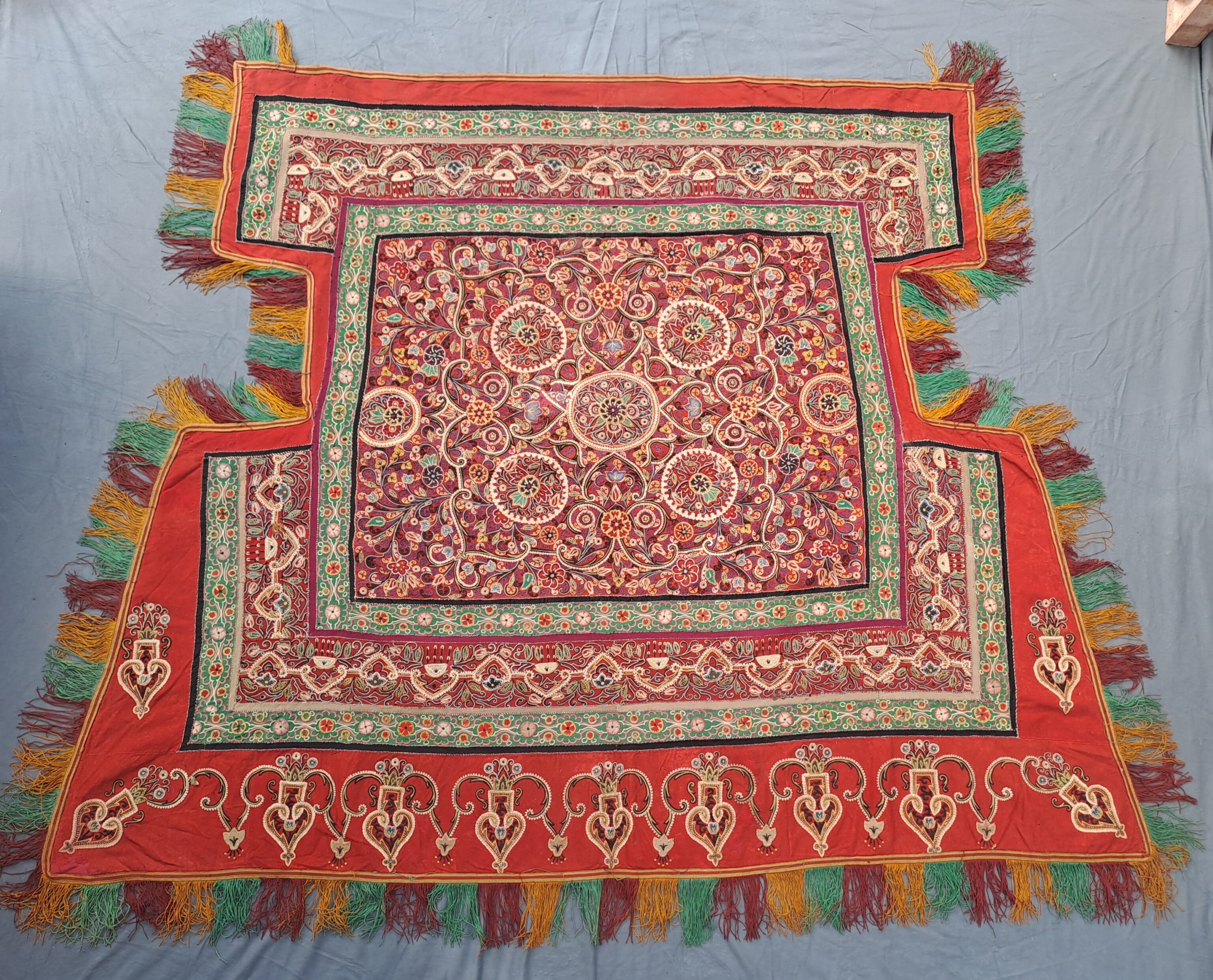
This Rasht saddle cover dates to around 1900.
It is a magnificent textile which was used to cover a horse in order to make a statement: the owner would have been a person of power and high social standing.
Technically, it is worked in mixed technique on mostly red woollen broadcloth: silk embroidery in chain stitch and couching, plus appliquée and twining, with the silk yarn of the braiding forming the multicoloured fringes.
A recent exhibition at The George Washington Museum and The Textile Museum, Washington, titled “Adorning the Horse: Equestrian Textiles for Power and Prestige” opened on 21 February and closed on 20 June 2026, putting these lavishly decorated textiles into the spotlight. Based on a gift from the Brick Freedman Collection, it showcased horse covers from Anatolia through to Japan. A very similar saddle cover to this piece, with the accession number 2021.17.16, was included in the exhibition.
According to Sumru Belger Krody, one of the two co-curators of the exhibition, these elaborate textiles were most likely produced in professional workshops, which is, of course, almost certain given the complexity of the production of these fine pieces.
For an interesting talk on the exhibition by the two co-curators, and as an event on the Rug and Textile Appreciation Morning programme, see the recording in the following link: https://vimeo.com/1198797337?share=copy&fl=sv&fe=ci
This is a collectible as well as a highly decorative textile